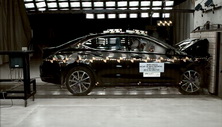
Open safety recalls, the components owners report failing most often, crash-test results and running costs for the 2017 Acura TLX, assembled from NHTSA and EPA records.
Everything on this page applies to the model as a whole. Run its VIN to decode that exact car, its engine, trim, assembly plant and factory equipment, alongside these records.
Open a VIN recordRecalls and complaints are filed against a specific model year, so figures differ from one year to the next even within a single generation. See every Acura TLX year.
No EPA fuel-economy match for this model. Naming may differ, or it predates EPA records.
NHTSA lists 3 recalls for this make, model and year. Recalls apply to the model, so some may already be fixed on this specific car. A dealer can confirm from the VIN.
Issue: Honda (American Honda Motor Co.) is recalling certain 2016-2018 Acura MDX, 2015-2019 Acura TLX and 2015-2017 Honda Accord vehicles, equipped with a 3.5L V6 engine. Particulates in fuel may adhere to the internal components of the fuel pump, reducing its performance.
Risk: Reduced fuel pump performance can result in an engine stall, increasing the risk of crash.
Remedy: Honda will notify owners, and dealers will update the fuel injection engine control unit (FI-ECU) software and, if necessary, replace the fuel pump, free of charge. The recall began March 25, 2019. Owners may contact customer service at 1-888-234-2138. Acura's recall number for this recall is P3W. Honda's recall number for this recall is N3X.
Campaign 19V060000
Issue: Honda (American Honda Motor Co.) is recalling certain 2015-2020 Acura TLX, 2016-2020 Acura MDX, 2016 and 2018-2019 Pilot, 2017 and 2019 Ridgeline, and 2018-2019 Odyssey vehicles. Due to a manufacturing error, the connecting rod bearing in the engine may wear and seize, damaging the engine.
Risk: A damaged engine may run improperly or stall while driving, increasing the risk of a fire, crash, or injury.
Remedy: Dealers will inspect and repair, or replace the engine as necessary, free of charge. Owner letters were mailed March 28, 2024. 2016-2017 Acura MDX owner letters were mailed November 1, 2024. 2016-2020 Acura MDX owner letters are expected to be mailed in mid-December 2024. Honda began mailing owner notification letters as of March 18, 2024. 2015-2016 Acura owner letters are expected to be mailed mid-December 2024, 2018 Acura TLX owner letters are expected to be mailed the end of March/early April 2024, 2019 Acura TLX owner letters are expected to be mailed mid-May 2024, 2020 Acura TLX owner letters are expected to be mailed mid-June 2024, and 2016-2020 Acura MDX owner letters are expected to be mailed January 27, 2025. Owners may contact Honda customer service at 1-888-234-2138. Honda's numbers for these recalls are XG1 and GG0.
Campaign 23V751000
Issue: Honda (American Honda Motor Co.) is recalling certain 2013-2023 Honda Accord, Civic Coupe, Civic Sedan, Civic Hatchback, Civic Type R, CR-V, HR-V, Ridgeline, Odyssey, Acura ILX, MDX, MDX Hybrid, RDX, RLX, TLX, 2019-2022 Honda Insight, Passport, 2020 Honda CR-V Hybrid, 2018-2019 Honda Clarity PHEV, Fit, and 2015-2020 Honda Accord Hybrid, Pilot, Acura NSX vehicles. The fuel pump inside the fuel tank may fail.
Risk: Fuel pump failure can cause an engine stall while driving, increasing the risk of a crash.
Remedy: Dealers will replace the fuel pump module, free of charge. Owner letters were mailed September 6, 2024. Owners may contact Honda customer service at 1-888-234-2138. Honda's numbers for this recall are KGC and KGD. This recall is an expansion of NHTSA recall numbers 21V-215 and 20V-314.
Campaign 23V858000

NHTSA frontal crash test
2 open NHTSA investigations into this model. Investigations come before recalls, so these are potential defects not yet covered by one.
Rated configuration: 2017 Acura TLX 4 DR FWD
The parts named most often across 71 owner complaints filed with NHTSA for this make, model and year.
2 fires
Complaints are self-reported and skew toward problems people find alarming, so read this as where to look rather than as a defect rate.
Acura TLX 2017, with only 112,000 miles. On [XXX], while the consumer was driving, the vehicle caught on fire. The consumer saw what appeared to be smoke coming from under the hood. The consumer stopped the vehicle immediately at a 4-way intersection, put it in park, and turned it off. The hood latch was open. When the consumer opened the hood, the engine compartment was on fire, and the car was engulfed in fire within seconds. Fire department and Police depratment arrived at the scene. The car was deemed a total loss, and the fire was determined to have started in the engine compartment. In May 2024, Acura stated that the connecting rod bearing needed replacement and that it was covered under the recall. However, 6 months after replacement, in October 2024, the knocking noise returned. The vehicle was brought to the Acura dealership, which noted at that time that the engine needed to be replaced, but the repair was denied under the recall this time. As required and recommended by the Acura Dealership, as well as by the recall, which noted safety risks, the consumer moved forward with having the engine replaced by the Acura Dealership, and the cosnsumer paid out of pocket. The vehicle was at the Acura dealership in Westwood for service from October 2024 until February 2025. INFORMATION REDACTED PURSUANT TO THE FREEDOM OF INFORMATION ACT (FOIA), 5 U.S.C. 552(B)(6)
Acura Service Bulletin B18-014 (NHTSA TSB #10135108) The repeated failure of the driver’s power seat height-adjustment mechanism due to stripped internal gears in the Vertical Transmission Assembly (VTA), as identified in Acura Service Bulletin B18-014, presents a significant safety concern. A failure of the driver’s seat adjustment mechanism can prevent the driver from maintaining a proper and secure seating position, potentially impairing visibility, access to the pedals and steering wheel, and the ability to safely control the vehicle. Because Honda/Acura has documented this failure and identified a specific repair procedure, I believe the defect warrants investigation by NHTSA and consideration for a safety recall rather than leaving affected owners responsible for repairs. Despite the Acura bulletin and recommended repairs, Marysville Honda in Ohio is recommending a $5700 repair bill inconsistent with the Acura bulletin.
My 2017 Acura TLX stalled dangerously on the highway due to an unexpected fuel delivery failure, creating an immediate traffic hazard. Hiley Acura of Fort Worth diagnosed the vehicle with code P0087 (Low Fuel Rail Pressure) and confirmed it needs a new low-pressure fuel pump assembly for $1,540.62. They also pulled code P0430 (Catalyst System Efficiency) showing my front catalytic converter has failed, costing $2,461.77.The low-pressure fuel pump failure starved the engine of fuel, causing the highway stall. This fueling issue directly overheated and destroyed the catalytic converter substrate.This pump failure is the core subject of the Oliver v. Honda class action lawsuit. Honda previously issued a temporary corporate software update on my vehicle that deliberately altered how the computer reads errors, masking the physical fuel pump defect. This software update is the exact reason my car currently shows no open recalls on standard databases, despite still containing the defective, unreplaced factory hardware. This temporary software fix has now failed, resulting in a dangerous highway stall, and Honda is using the software-cleared VIN status to deny safety coverage.
I have this car 2017 acura tlx v6 shawd from acura dealership 3months already. I hear little knocking sound from my bottom block.
Vehicle consistently pulls to right and on grooved concrete acts in abnormal way, weaving withing the lane. I have taken to Acura to try to diagnose - they tell me there is no adjustment they can make. I have tried with Honda corporate, but they want me to go back for another diagnosis on the car at Acura. At this time there is no reason to duplicate efforts or time. I have also taken to independent shops and they indicate they cannot correct the problem also.
The keyless access unit broke around 100k miles. Car acted like it was having a seizure. If car was locked, alarm goes off nonstop (during these episodes, which are intermittent) and all dash lights and head lights blink on and off over and over in quick succession. If car was not locked, only the lights had a seizure, there would be no audible alarm. Seemed to happen more near towers (cell towers, fire station broadcast tower, absolutely could not leave the car alone in nyc and had to go home). So so so embarrassing. So many people with this issue.
Vehicle has been recalled for a speed sensor issue that still persists. Recall repair was NOT properly executed. Vehicle engine still randomly shuts off while in idle at stoplights and during travel. Engine won’t start at this point.
My car broke down on 04/05/2026 on the highway at a light with on coming traffic.I took it to express oil change 04/06/2026 they told me my car need a crankshaft so I proceeded to get more information and come to find out it was a recall on the crankshafts on my car. This is the second recall I have had done to my car the first recall was for the motor. This second one is for the crankshaft recall number- CH7. I was told by Acura a month and a half after them having my car that the serial number on my motor doesn’t fall up under the recall, but my vin number does and there saying they can not fix my car. Only had this motor for 2 or 3 years from the first recall it had on it.
I was refueling my vehicle at Fullerton Costco, the internal metal flap of the capless fuel filler neck is stuck closed and preventing me from inserting a gas nozzle to refuel the vehicle. I could not refuel my gas tank. Luckily, my vehicle still has some fuel left, enough for me to get to the nearest Acura dealer (Cerritos Acura) to have them fix it. It was expensive though for an issue that should not happen at all. Also, a vehicle cannot be refueled or has a failed fuel neck flap, it can become a safety hazard and this is the main reason I file this complaint against Acura.
The contact owns a 2017 Acura TLX. The contact stated the vehicle was repaired under NHTSA Campaign Number: 23V751000 (ENGINE AND ENGINE COOLING) but the fix failed to repair the vehicle. The contact stated that after the repair was performed, there was an abnormal fuel odor coming from the vehicle. The vehicle was taken to the dealer approximately five times to be diagnosed, and it was determined that the oil rings on the fuel injector had detached. The oil rings were replaced, and the vehicle was repaired. The manufacturer was notified of the failure, and the contact was referred to the NHTSA Hotline to report the failure. The failure mileage was 142,000.
My 2017 Acura was involved in a low-speed collision where it failed to stop in a timely manner, resulting in a total loss declaration. This vehicle had open safety recalls (including the fuel pump/rod bearing issues) that remained unrepaired for over 1.5 years. Despite multiple inquiries, the manufacturer failed to provide a repair timeline or remedy. I believe these unresolved defects directly contributed to the braking failure and subsequent safety incident.
My car shuts off at idle without warning. No lights or codes. I’ve seen a fuel pump issue is the cause on other models like mine.
Showing 12 of 71 complaints.