Open safety recalls, the components owners report failing most often, crash-test results and running costs for the 2011 Honda Pilot, assembled from NHTSA and EPA records.
Everything on this page applies to the model as a whole. Run its VIN to decode that exact car, its engine, trim, assembly plant and factory equipment, alongside these records.
Open a VIN recordRecalls and complaints are filed against a specific model year, so figures differ from one year to the next even within a single generation. See every Honda Pilot year.
NHTSA lists 11 recalls for this make, model and year. Recalls apply to the model, so some may already be fixed on this specific car. A dealer can confirm from the VIN.
Issue: Honda (American Honda Motor Co.) is recalling certain 2014 Honda Insight and Acura TSX and TSX Wagon, 2014-2015 Honda Crosstour and Pilot vehicles nationwide, as well as certain 2014 Honda FCX Clarity and Fit EV vehicles in Florida, Hawaii, Puerto Rico, Texas, Alabama, Georgia, Louisiana, Mississippi, South Carolina, California, American Samoa, Guam, the Northern Mariana Islands (Saipan) and the U.S. Virgin Islands. Honda is also recalling certain 2011-2013 Acura TSX, TSX Wagon and ZDX, Honda Crosstour, Insight, Fit and Pilot vehicles, 2011-2012 Honda Accord and 2011 Honda Civic NGV, Civic, Civic Hybrid and CR-V vehicles in Arizona, Arkansas, Delaware, the District of Columbia, Illinois, Indiana, Kansas, Kentucky, Maryland, Missouri, Nebraska, Nevada, New Jersey, New Mexico, North Carolina, Ohio, Oklahoma, Pennsylvania, Tennessee, Virginia and West Virginia. Lastly, Honda is recalling certain 2010-2013 Acura TSX and ZDX, Honda Crosstour, Fit, Insight and Pilot, 2011-2013 TSX Wagon, 2010-2012 Honda Accord and 2010-2011 Honda Civic NGV, Civic, Civic Hybrid and CR-V vehicles in Alaska, Colorado, Connecticut, Idaho, Iowa, Maine, Massachusetts, Michigan, Minnesota, Montana, New Hampshire, New York, North Dakota, Oregon, Rhode Island, South Dakota, Utah, Vermont, Washington, Wisconsin and Wyoming. These vehicles are equipped with certain air bag air bag inflators assembled as part of the frontal air bag modules, and used as original equipment or replacement equipment (such as after a vehicle crash necessitating replacement of the original air bags), may explode due to propellant degradation occurring after long-term exposure to higher absolute humidity, temperature and temperature cycling.
Risk: An inflator explosion may result in sharp metal fragments striking the driver or other occupants resulting in serious injury or death.
Remedy: Honda will notify owners, and dealers will replace the passenger frontal air bag inflator, free of charge. The recall began November 6, 2018. Owners may contact Honda customer service at 1-888-234-2138. Honda's numbers for this recall are M2J and S2K.
Campaign 18V661000
Issue: Honda (American Honda Motor Co.) is recalling certain 2003-2012 Honda Accord and Pilot, 2010 Accord Crosstour, 2001-2011 Civic, 2002-2011 CR-V, 2003-2004, 2006-2008 and 2011 Element, 2007 and 2009-2013 Fit, 2010-2012 Insight, 2002-2004 Odyssey, and 2012 Ridgeline vehicles. The front passenger air bag may have been installed incorrectly during replacement.
Risk: An incorrectly installed air bag may deploy improperly in the event of a crash, increasing the risk of injury.
Remedy: Honda will notify owners, and dealers will inspect and, if necessary, replace the passenger frontal air bag module assembly, free of charge. The recall began June 22, 2018. Owners may contact Honda customer service at 1-888-234-2138. Honda's numbers for this recall are K1P, and M1O.
Campaign 18V268000
Issue: Honda (American Honda Motor Co.) is recalling certain 2009-2014 Acura TSX, 2011-2014 TSX Sport Wagon, 2010-2013 ZDX, 2008-2012 Honda Accord, 2010-2011 Accord Crosstour, 2006-2011 Civic and Civic Hybrid, 2008-2010 Civic GX NGV, 2012-2015 Crosstour, 2007-2011 CR-V, 2009-2013 Fit, 2014 Fit EV, 2010-2014 Insight, and 2009-2015 Pilot vehicles. The vehicles are equipped with passenger frontal air bag inflators assembled as a recall remedy part or replacement service part, that may explode due to propellant degradation occurring after long-term exposure to high absolute humidity, temperature and temperature cycling.
Risk: An inflator explosion may result in sharp metal fragments striking the driver or other occupants resulting in serious injury or death.
Remedy: Honda will notify owners, and dealers will replace the passenger frontal air bag inflator, free of charge. The recall began August 12, 2019. Owners may contact Honda customer service at 1-888-234-2138. Honda's numbers for this recall are F5F and Q5E.
Campaign 19V502000
Issue: Honda (American Honda Motor Co.) is recalling certain 2009-2014 Acura TSX, 2011-2013 TSX Sport Wagon, and 2010-2012 ZDX and 2008-2012 Honda Accord, 2010-2011 Accord Crosstour, 2006-2011 Civic, Civic Hybrid and Civic NGV, 2012-2014 Crosstour, 2007-2011 CR-V, 2009-2013 Fit, 2010-2013 Insight, and 2009-2015 Pilot vehicles. The front passenger air bag inflator may have been installed incorrectly during replacement.
Risk: An incorrectly installed air bag inflator may not properly deploy the passenger frontal air bag in the event of a crash, increasing the risk of injury.
Remedy: Honda will notify owners, and dealers will inspect the inflator installation and, if necessary, replace the passenger frontal air bag module assembly, free of charge. The recall began July 5, 2019. Owners may contact Honda customer service at 1-888-234-2138. Honda's numbers for this recall are M4O, P4R, T4Q, and W4P.
Campaign 19V378000
Issue: Honda (American Honda Motor Co.) is recalling certain 2008-2012 Accord, 2010-2012 Accord Crosstour, 2006-2011 Civic, 2007-2011 CR-V, 2009-2012 Fit and Pilot, 2010-2012 Insight, and 2009-2012 Acura TSX vehicles that received replacement passenger frontal air bag inflators. One dealership may have incorrectly installed the replacement air bag inflators.
Risk: In the event of a crash, an incorrectly installed passenger frontal air bag inflator may deploy the air bag improperly, increasing the risk of injury.
Remedy: Honda will notify owners, and dealers will replace the passenger frontal air bag module assembly, free of charge. The recall began October 30, 2017. Owners may contact Honda customer service at 1-888-234-2138. Honda's numbers for this recall are O07, Y0A, N06, G05, M04, Y01, and O09.
Campaign 17V545000
Issue: Honda (American Honda Motor Co.) is recalling certain 2010-2013 Acura TSX, ZDX, Honda Accord Crosstour, Fit, Insight and Pilot vehicles, 2011-13 Acura TSX Sportswagon, 2010-2012 Honda Accord,, 2010-2011 Honda Civic, Civic NGV, Civic Hybrid and CR-V vehicles and 2013 Honda FCX Clarity and Fit EV vehicles ever registered in the states of Alabama, California, Florida, Georgia, Hawaii, Louisiana, Mississippi, South Carolina, Texas, Puerto Rico, American Samoa, Guam, the Northern Mariana Islands (Saipan), and the U.S. Virgin Islands or "Zone A." Additionally, Honda is recalling certain 2010-2012 Acura TSX, Honda Accord, Accord Crosstour, Fit and Pilot, 2010-2011 Honda Civic, Civic NGV, Civic Hybrid and CR-V, and 2010 Acura ZDX and Honda Insight vehicles ever registered in the states of Arizona, Arkansas, Delaware, District of Columbia, Illinois, Indiana, Kansas, Kentucky, Maryland, Missouri, Nebraska, Nevada, New Jersey, New Mexico, North Carolina, Ohio, Oklahoma, Pennsylvania, Tennessee, Virginia, and West Virginia or "Zone B." Unless included in Zones A or B above, Honda is recalling certain 2009 Acura TSX, Honda Accord, Civic, Civic NGV, Civic Hybrid, CR-V, Fit, and Pilot vehicles ever registered in the states of Alaska, Colorado, Connecticut, Idaho, Iowa, Maine, Massachusetts, Michigan, Minnesota, Montana, New Hampshire, New York, North Dakota, Oregon, Rhode Island, South Dakota, Utah, Vermont, Washington, Wisconsin, and Wyoming or "Zone C." These vehicles are equipped with certain air bag inflators assembled as part of the frontal air bag modules, and used as original equipment or replacement equipment (such as after a vehicle crash necessitating replacement of the original air bags), may explode due to propellant degradation occurring after long-term exposure to higher absolute humidity, temperature and temperature cycling.
Risk: An inflator explosion may result in sharp metal fragments striking the driver or other occupants resulting in serious injury or death.
Remedy: Honda will notify owners, and dealers will replace the passenger frontal air bag inflator, free of charge. The recall began February 16, 2018. Owners may contact Honda customer service at 1-888-234-2138. Honda's numbers for this recall are B0K and L0J.
Issue: Honda (American Honda Motor Co.) is recalling certain 2009-2012 Acura TSX, 2011-2012 Acura TSX Wagon, 2010-2012 Acura ZDX, 2008-2012 Honda Accord, 2010-2012 Honda Accord Crosstour and Honda Insight, 2009-2012 Honda Fit, 2009-2012 Pilot, 2007-2011 Honda CR-V, 2012 Honda FCX Clarity and 2006-2011 Honda Civic, Civic Hybrid, Civic NGV vehicles originally sold, or ever registered, in Alabama, California, Florida, Georgia, Hawaii, Louisiana, Mississippi, South Carolina, Texas, Puerto Rico, American Samoa, Guam, the Northern Mariana Islands (Saipan), and the U.S. Virgin Islands, or "Zone A." Additionally, if not included in "Zone A" above, Honda is recalling certain 2009 Acura TSX, Honda Fit and Pilot, 2008-2009 Honda Accord, 2006-2009 Civic, Civic Hybrid and Civic NGV, and 2007-2009 Honda CR-V vehicles originally sold, or ever registered, in Arizona, Arkansas, Delaware, District of Columbia, Illinois, Indiana, Kansas, Kentucky, Maryland, Missouri, Nebraska, Nevada, New Jersey, New Mexico, North Carolina, Ohio, Oklahoma, Pennsylvania, Tennessee, Virginia, and West Virginia, or "Zone B." Additionally, if not included in "Zone B" above, Honda is recalling certain 2008 Honda Accord, 2006-2008 Honda Civic, Civic Hybrid and Civic NGV and 2007-2008 Honda CR-V vehicles originally sold, or ever registered, in Alaska, Colorado, Connecticut, Idaho, Iowa, Maine, Massachusetts, Michigan, Minnesota, Montana, New Hampshire, New York, North Dakota, Oregon, Rhode Island, South Dakota, Utah, Vermont, Washington, Wisconsin, and Wyoming. These vehicles are equipped with certain air bag inflators assembled as part of the passenger frontal air bag modules used as original equipment or replacement equipment. In the event of a crash necessitating deployment of the front air bags, these inflators may rupture due to propellant degradation occurring after long-term exposure to absolute humidity and temperature cycling.
Risk: An inflator rupture may result in metal fragments striking the vehicle occupants resulting in serious injury or death.
Remedy: Honda will notify owners, and dealers will replace the front passenger side air bag inflator, free of charge. The manufacturer has mailed an interim notification, and will send a second notification when parts are available. Owners may contact Honda customer service at 1-888-234-2138. Honda's numbers for this recall are KE1 and KE2.
Issue: Honda (American Honda Motor Co.) is recalling certain model year 2009-2011 Acura TSX, 2011 TSX Wagon, 2010-2011 Acura ZDX, 2008-2011 Honda Accord, 2010-2011 Accord Crosstour, 2006-2011 Civic, Civic Hybrid, and Civic GX, 2007-2011 CR-V, 2010-2011 FCX Clarity and Insight, and 2009-2011 Fit, and Pilot vehicles originally sold, or ever registered, in Alabama, California, Florida, Georgia, Hawaii, Louisiana, Mississippi, South Carolina, Texas, Puerto Rico, American Samoa, Guam, the Northern Mariana Islands (Saipan), and the U.S. Virgin Islands, or "Zone A." Additionally, unless already included in "Zone A" above, Honda is recalling certain model year 2008 Honda Accord, 2006-2008 Civic, Civic Hybrid and Civic GX, and 2007-2008 CR-V vehicles originally sold, or ever registered, in Arizona, Arkansas, Delaware, the District of Columbia, Illinois, Indiana, Kansas, Kentucky, Maryland, Missouri, Nebraska, Nevada, New Jersey, New Mexico, North Carolina, Ohio, Oklahoma, Pennsylvania, Tennessee, Virginia, and West Virginia, or "Zone B." Vehicles not originally sold or ever registered in either Zones A or B are not subject to this safety recall. These vehicles are equipped with certain air bag inflators assembled as part of the passenger frontal air bag modules, and used as original equipment or replacement equipment. In the event of a crash necessitating deployment of the front air bags, these inflators may rupture due to propellant degradation occurring after long-term exposure to absolute humidity and temperature cycling.
Risk: An inflator rupture may result in metal fragments striking the vehicle occupants resulting in serious injury or death.
Remedy: Honda will notify owners, and dealers will replace the inflator, free of charge. The recall began March 2017. Owners may contact Honda customer service at 1-888-234-2138. Honda's numbers for this recall is KA4, KA5, KA6, and KA7.
Campaign 16V346000
Issue: HONDA IS RECALLING CERTAIN MODEL YEAR 2009-2011 PILOT VEHICLES MANUFACTURED FROM MARCH 13, 2008, THROUGH AUGUST 30, 2011. THERE IS A POSSIBILITY THAT THE STITCHING THAT SECURES THE END OF THE DRIVER AND FRONT PASSENGER LAP SECTION OF THE SEATBELT MAY BE INCOMPLETE OR MISSING.
Risk: IF THE STITCHING IS INCOMPLETE OR MISSING, THE SEATBELT MAY DETACH FROM THE ANCHOR WEBBING, INCREASING THE RISK OF PERSONAL INJURY IN A CRASH.
Remedy: HONDA DEALERS WILL CONDUCT A SPECIALIZED INSPECTION OF THE DRIVER AND FRONT PASSENGER SEATBELTS, AND IF NECESSARY, REPLACE THE SEATBELTS, FREE OF CHARGE. THE SAFETY RECALL BEGAN ON OCTOBER 5, 2011. OWNERS MAY CONTACT HONDA AUTOMOBILE CUSTOMER SERVICE AT 1-800-999-1009.
Campaign 11V468000
Issue: Honda is recalling certain model year 2009-2013 Pilot and 2011-2013 Odyssey passenger vehicles manufactured from March 13, 2008, through December 21, 2012. One or more rivets that attach the airbag module to the airbag cover may be missing.
Risk: The absence of more than one rivet could alter the performance of the driver's airbag during deployment. This could potentially increase the risk of injury during a crash.
Remedy: Honda will notify owners and instruct them to take their vehicle to a Honda dealer. The dealer will inspect the driver's airbag module and replace it if necessary, free of charge. The recall began on March 14, 2013. Owners may contact Honda at 1-800-999-1009.
Campaign 13V016000
Issue: HONDA IS RECALLING CERTAIN MODEL YEAR 2010-2011 HONDA ACCORD V6 AND MODEL YEAR 2011 HONDA PILOT VEHICLES. THE BOLTS THAT ATTACH THE LOWER LEFT AND RIGHT FRONT DAMPER BRACKET TO THE FRONT SUSPENSION AND THE SPINDLE NUTS ON THE PILOT MAY NOT HAVE BEEN PROPERLY TIGHTENED WHICH MAY RESULT IN LOSS OF STEERING. THE SPINDLE NUTS FOR THE AXLE ON THE ACCORD V6 MAY NOT HAVE BEEN TIGHTENED PROPERLY WHICH MAY RESULT IN EXCESSIVE NOISE AND/OR LOSS OF STEERING.
Risk: LOSS OF STEERING INCREASES THE RISK OF A CRASH.
Remedy: DEALER WILL INSPECT AND REPLACE ANY LOOSE FRONT DAMPER BRACKET BOLTS OR SPINDLE NUTS ON THE PILOT IF NECESSARY. DEALER WILL INSPECT AND REPLACE THE SPINDLE NUTS ON THE ACCORD V6 IF NECESSARY. THE SAFETY RECALL BEGAN DECEMBER 23, 2010. OWNERS MAY CONTACT HONDA AT 1-800-999-1009.
Campaign 10V640000
Campaign 18V042000
Campaign 17V030000
No EPA fuel-economy match for this model. Naming may differ, or it predates EPA records.

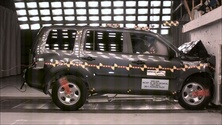
NHTSA frontal crash test
Rated configuration: 2011 Honda Pilot SUV AWD
The parts named most often across 293 owner complaints filed with NHTSA for this make, model and year.
10 crashes · 12 injured
1 crash · 1 injured
1 crash
3 injured
Complaints are self-reported and skew toward problems people find alarming, so read this as where to look rather than as a defect rate.
All of the components associate with the Advanced Driver Assistance Systems (ADAS) on my 2021 Honda Passport failed at the same time. From what I have learned, they are all associated with the windshield-mounted camera (also called the monocular camera or lane assist camera) that controls safety features like the Lane Keeping Assist System (LKAS) and Lane Departure Warning, among others. The dashboard lights for all of these features remain illuminated, meaning that none of these safety features are working. The module/camera has a history with this vehicle of overheating and failing. My safety is at risk because all of these features are now disabled until the part is replaced. I took my vehicle to a local mechanic but not to a Honda dealership. I have been told that there is no recall issued, but that the problem is widespread throughout 3-4 years of this model of Honda Passports. To replace this part, I have been told costs consumers 1800-2400, and can only be done at the dealership. There were no problems with the vehicle prior to the failure of the part. The vehicle is a 2011 model with 66,000 miles on it.
The contact owns a 2011 Honda Pilot. The contact stated that while parked, the front driver-side seat belt retractor failed to retract as intended. The contact related the failure to NHTSA Campaign Number: 11V468000 (Seat Belts). The vehicle was not diagnosed or repaired by an independent mechanic or dealer. The manufacturer was not made aware of the failure. The failure mileage was approximately 149,775.
On XXX at approximately 6:04 PM, the vehicle was being driven on a highway in [XXX] — after dark, during an active snowstorm, on slick roads, at approximately 40 MPH — when the front passenger-side airbag deployed spontaneously with no collision, no impact, and no warning of any kind. There were no prior warning lamps or symptoms. The deployment cracked the windshield and caused interior damage. The component is available for inspection upon request. This vehicle had the Takata recall performed in 2019. The failure is believed to be related to NHTSA Recall 19V502000 (Honda Recall Nos. F5F/Q5E), covering 2009-2015 Honda Pilots with passenger frontal airbag inflators that may explode due to propellant degradation from humidity and temperature cycling. A spontaneous deployment with no crash is consistent with this defect. The vehicle was inspected by an authorized Honda dealership. Technician findings included: blown fuses 9 and 11, diagnostic system crashing repeatedly, complete loss of SRS/ABS/gauge communication, burning smell from the airbag inflator, copious F-CAN malfunction codes, and DTC U0151. Technician concluded: "ADVISE replacing deployed passenger airbag and inflator assembly." The dealership confirmed the component needs replacement but could not determine the cause. A spontaneous airbag deployment at highway speed during a snowstorm with no crash poses extreme risk to the driver and public. This incident warrants investigation to determine whether recall remedy parts from prior Takata campaigns are continuing to fail in other vehicles. INFORMATION REDACTED PURSUANT TO THE FREEDOM OF INFORMATION ACT (FOIA), 5 U.S.C. 552(B)(6)
Odometer Fraud. The contact purchased a 2011 Honda Pilot. The contact stated that while attempting to register the vehicle, it was discovered that there was a mileage discrepancy. The vehicle was a private sale. At the time of purchase, the mileage was 115,776 and at the time of registration. The contact stated the vehicle was currently at 116,187 miles. The contact recently received a Carfax Report and discovered that the mileage was 191,299 on March 22, 2026. The mileage was listed at 115,776.
Odometer Fraud. The contact purchased a 2011 Honda Pilot. It was discovered that there was a mileage discrepancy. The vehicle was a private sale from the Facebook Marketplace on 2/25/26. At the time of purchase, the vehicle mileage was 144,135. After retrieving a Carfax Report, the contact discovered that the mileage was 204,000. The contact stated that while driving at speeds of 35 MPH or lower, there were sounds of an electrical system failure coming from the vehicle. The following morning, the check engine warning light was illuminated. The vehicle was taken to the dealer to be diagnosed, and it was determined that the catalytic converter needed to be replaced. The vehicle was not repaired. The dealer confirmed that the actual mileage was 204,000. The contact reported the odometer fraud to the DMV, who then informed the contact that the private seller had not transferred the title yet. The manufacturer was not made aware of the failure.
Odometer Fraud. The contact purchased a 2011 Honda Pilot. The contact discovered a mileage discrepancy after the purchase. The vehicle was a private sale. At the time of purchase, the mileage was 144,000. Twenty-four hours after the purchase, the check engine warning light illuminated. The contact had an appraisal on the vehicle, and it was discovered that the mileage on the Title was 204,000.
Unknown
Malfunctioned the brake the pedal and the seatbelt it was on Friday to I was driving after I yield drive there was few cars head of me ON A distance now I am trying to start slowdown early can't find the brake so I press the pedal with force when the pedal reaches to the floor slim stop right behind the car of me I will say 99% inch away to touch the car in front of me and the seatbelt even help me back and the all way have trying to move to other direction on when driving shifting unstable I don't fell save at all when I'm driving that specially driving to work at night for me that car need to have a state inspection and a complete repair before the dealership sold that car to me
The contact’s wife owns a 2011 Honda Pilot. The contact stated that while the vehicle was parked and turned off, the rear window unexpectedly shattered. The dealer was contacted. The vehicle was not diagnosed or repaired. The manufacturer was made aware of the failure and referred the contact to the NHTSA Hotline for further assistance. The failure mileage was approximately 150,000.
Odometer Fraud. The contact purchased a 2011 Honda Pilot. The contact stated that while attempting to register the vehicle, it was discovered that there was a mileage discrepancy. The vehicle was a private sale. At the time of purchase, the vehicle mileage was 55,653 and at the time of registration, it was discovered that the mileage was 225,000.
Break pedal goes to the floor
Odometer Fraud. The contact purchased a 2011 Honda Pilot. The contact stated that while attempting to register the vehicle, it was discovered that there was a mileage discrepancy. The vehicle was a dealer sale. At the time of purchase, the vehicle mileage was 150,000, and at the time of registration, it was discovered that the mileage was 166,000.
Showing 12 of 293 complaints.