Open safety recalls, the components owners report failing most often, crash-test results and running costs for the 2010 Hyundai Genesis, assembled from NHTSA and EPA records.
Everything on this page applies to the model as a whole. Run its VIN to decode that exact car, its engine, trim, assembly plant and factory equipment, alongside these records.
Open a VIN recordRecalls and complaints are filed against a specific model year, so figures differ from one year to the next even within a single generation. See every Hyundai Genesis year.
Over 5 years this costs $9,250 more in fuel than an average new vehicle.
NHTSA lists 3 recalls for this make, model and year. Recalls apply to the model, so some may already be fixed on this specific car. A dealer can confirm from the VIN.
Issue: Hyundai Motor America (Hyundai) is recalling certain 2009-2011 Hyundai Genesis vehicles manufactured April 30, 2008, to November 21, 2010, and 2011 Hyundai Equus vehicles manufactured July 31, 2010, to November 21, 2010. Due to a circuit failure, the stop lamps in the affected vehicles may not illuminate.
Risk: A following vehicle may not recognize that the vehicle is slowing or coming to a stop if the stop lamps on the vehicle do not illuminate as expected. There is an increased risk of a rear-end crash as a result.
Remedy: Hyundai will notify owners, and dealers will repair the stop lamp switch circuit, free of charge. Hyundai issued an interim notification to owners on January 6, 2015. The recall began on March 23, 2015. Owners may contact Hyundai customer service at 1-855-671-3059. Hyundai's number for this recall is 125.
Campaign 14V713000
Issue: Hyundai Motor Company (Hyundai) is recalling certain model year 2006-2009 Accent, model year 2007-2011 Azera, Sonata and Sante Fe,2006-2011 Tucson, 2009-2011 Elantra Touring, 2007-2010 Elantra, 2008-2011 Veracruz, 2009-2011 Genesis, 2010-2011 Genesis Coupe, 2007-2008 Entourage, and 2006-2008 Tiburon vehicles. Originally, in April 2013, Hyundai recalled 1,059,824 model year 2007-2009 Accent and Tucson, model year 2007-2010 Elantra, model year 2007-2011 Santa Fe, model year 2008-2009 Veracruz, model year 2010-2011 Genesis Coupe, and model year 2011 Sonata vehicles. In September 2013, Hyundai informed the agency that it was adding more vehicles to this campaign, representing an additional 652,512 units. The total number of vehicles being recalled is now 1,712,336. In the affected vehicles, the stop lamp switch may malfunction. A malfunctioning stop lamp switch may cause the brake lights to not illuminate when the brake pedal is depressed or may cause an inability to deactivate the cruise control by depressing the brake pedal. Additionally, a malfunctioning stop lamp switch may also result in intermittent operation of the push-button start feature, affect the operation of the brake transmission shift interlock feature, preventing the shifter from being moved out of the PARK position and cause the Electronic Stability Control (ESC) malfunction light to illuminate.
Risk: Failure to illuminate the stop lamps during braking or inability to disengage the cruise control could increase the risk of a crash. Additionally, when the ignition is in the 'ON' position, the transmission shifter may be able to be moved out of Park without first applying the brake. This may lead to unintentional movement of the car which may increase the risk of a crash.
Remedy: Hyundai will notify owners, and dealers will replace the stop lamp switch, free of charge. The safety recall began on April 22, 2013. Owners may contact Hyundai at 1-800-633-5151. Hyundai's recall campaign number is 110.
Campaign 13V113000
Issue: Hyundai is recalling certain model year 2009-2012 Genesis vehicles manufactured April 30, 2008, through March 28, 2012. The vehicles may contain brake fluid which does not protect against corrosion of the Hydraulic Electronic Control Unit (HECU).
Risk: If the module corrodes, reduced brake effectiveness may result, increasing the risk of a crash.
Remedy: Hyundai will notify owners and instruct them to bring their vehicle to a dealer for service. Hyundai will inspect the HECU module for proper operation, and will replace the modules as necessary. Hyundai will replace the factory brake fluid in those vehicles that have not previously had the factory brake fluid replaced. These repairs will be done free of charge. The recall began on December 24, 2013. Owners may contact Hyundai at 1-800-633-5151 or by email at consumeraffairs@hmausa.com. Hyundai's recall number is 114.
Campaign 13V489000

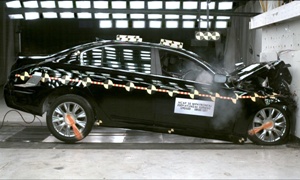
NHTSA frontal crash test
1 open NHTSA investigation into this model. Investigations come before recalls, so these are potential defects not yet covered by one.
Rated configuration: 2010 Hyundai Genesis 4-DR w/SAB
The parts named most often across 156 owner complaints filed with NHTSA for this make, model and year.
1 crash
1 crash
6 crashes · 5 injured
2 crashes · 5 injured
Complaints are self-reported and skew toward problems people find alarming, so read this as where to look rather than as a defect rate.
Brakes went completely out while driving, absolutely terrifying. Pedal went straight to the floor and wouldn't stop. I had to manually downshift until it was under 5 mph and then it would barely stop.
Electrical Battery Draining Replaced Battery In Oct 2023 Within 1 to 3 Weeks No Power Battery Dead . Cannot Find What Is Drawing Power That Is Draining The Battery.
vehicle makes loud rattling noise on startup, while driving engine stalls upon checking engine it continues to run but belts do not turn n has no power. Also steering rack leaks as well as steering pump, has water in tail lens, evaporating system check engine light is on. Vehicle was diagnosed by repair shop n referred to take to dealer ... the problems was confirmed by independent service center
The brakes on my 2010 Genesis Coupe suddenly stopped working while on the freeway, luckily I was able to swerve into the carpool lane and avoid an accident. Upon taking it to Tuttle Click Hyundai I was told a master technician had to review it, which would cost $200 just to look at it. When the technician looked at the car, I was told it needed a new Brake Booster. Hyundai apparently no longer makes this part so the dealership had to locate an aftermarket replacement which costs about $1,100. I did note to the dealership that there was recalls on other 2010 Genesis cars for similar issues, but was told the recall was for the sedans, not the coupe and that they/Hyundai would not cover it. Upon installing the brake booster and bleeding the brakes, it was found that I also need a new ABS Module, which will cost up to $4,000 to find and install. Another user posted this same issue to the NHTSA in October 2022.
The 2.0T engine failed and the vehicle is currently at Hyundai service department waiting on my warranty company to do an inspection of the engine. My safety was at risk as the engine failed during normal operation of the vehicle on a busy city street near a blind curve which other vehicles travel at high rates of speed. Hyundai Service department has confirmed the engine has failed which it needs to be replaced/rebuilt. Hyundai Service department has inspected the vehicle. Waiting on inspection from warranty company. There were no warning lights or symptoms prior to the engine failure. Thankfully I was not operating the vehicle on the expressway as I normally do on my way home which could have put me in a much more dangerous scenario when the engine failed. When the engine failed it started to effect other components in the vehicle, as I started to completely lose the ability to maneuver the vehicle putting myself in a dangerous situation.
While driving, throttle stuck wide open. It was like I was flooring the gas pedal. I managed to pull over and stop vehicle. I restarted and was able to drive home.
On September 22, 2022 while traveling at about 65 mph on state highway 57 in CA, I came upon a sudden group of cars hitting their brakes and had to slam on my brakes but my 2010 Genesis Coupe did not stop and I had to swerve into an entrance lane on my right to avoid a serious collision. Fortunately there were no cars entering the highway on that entrance. I was then able to drive a short distance home. On May 26, 2022 I had my car serviced including the brakes by Service Auto Care and my car gave me no brake problems until this incident. On September 23 I brought my Genesis Coupe to Service Auto and explained what happened. The brakes worked fine on the way to the shop. They tested the brakes and said that the ABS module was defective but it was just put under a 15 year extended warranty by Hyundai on May 19, 2022 and to take it to the closest dealer. The dealer, Russell Westbrook Hyundai of Anaheim told me only the sedan was covered. This dangerous defect could occur at any time and cause a severe accident. I hope this report is helpful to the NHTSA and the defective part is replaced without charge. The dealership charged me $205 for an estimate, then wanted $2200 to re-do the brakes and then approximately $4000 to replace the ABS module. I have documents to back up everything I have presented.
The contact owns a 2010 Hyundai Genesis. The contact's wife stated that while driving approximately 35 MPH, the air bag warning light illuminated. The contact stated that he noticed that prior to the warning light being illuminated, a tear that had formed under the "SRS Air Bag" badge on the passenger’s side. The contact stated that the air bag warning light continually remained illuminated. The vehicle had not been taken to a dealer or independent mechanic to be diagnosed or repaired. The contact researched online and related the failure to NHTSA Campaign Number: 16V722000 (Air Bags). The manufacturer had not been informed of the failure. The failure mileage was approximately 196,000.
The contact owns a 2010 Hyundai Genesis. The contact stated that after parking and exiting the vehicle, moments later after returning to the vehicle it was discovered that the driver’s and passenger’s side headrest restraint had deployed. The cause of the failure was not determined. The local dealer was notified of the failure and indicated that the headrest needed to be replaced but no further assistance was offered. The manufacturer was not yet contacted. The failure mileage was 125,000
The contact owns a 2010 HYUNDAI GENESIS COUPE . The contact stated that while driving his vehicle, his brake system started to make noise and became unresponsive. The contact stated that he then drove his vehicle to the dealer to have his brakes changed. The contact stated that the dealer changed both brakes and, rotors , front and rear, however the failure still exist. The contact stated the dealer advised him of the recall on the same year, make , and model vehicle that was experiencing the same failure NHTSA campaign 13V489000 (SERVICE BRAKES,HYDRAULC). The contact stated that he was advised that the HECU needed to be replaced. The contact stated that he then contacted the manufacturer who advised him that his vehicle was not apart of the recall. The contact stated since then his vehicle remains with the dealer who adivised him to contact NHTSA. The mileage failure was 90,000.
The contact owns a 2010 Hyundai Genesis Coupe. The contact stated that while attempting to stop the vehicle, the brake pedal traveled to the floor and the stopping distance was extended. To stop the vehicle the brake pedal had to be pumped multiple times. The cause of the failure was not yet determined. The local dealer and manufacturer were both contacted regarding the failure and the contact was informed that the VIN was not included in the NHTSA Campaign Number: 13V489000 (Service Brakes, Hydraulic). The contact indicated that the vehicle had experienced the failure listed in the recall. The failure mileage was 79,000.
While attempting to brake on exit ramp off an interstate highway, the brake pedal was depressed almost to the floorboard with minimal slowing. The brakes were pumped several times with slowing vehicle speed. Fortunately, the exit ramp was long enough to allow a safe stop. Pedal remains soft and spongy. No warning lights are on. Brakes functioned normally until this incident at 138,200 miles. However, master cylinder was replaced at 102,000 miles for a similar problem at an independent auto shop. I am awaiting a dealer repair time. [XXX] INFORMATION Redacted PURSUANT TO THE FREEDOM OF INFORMATION ACT (FOIA), 5 U.S.C. 552(B)(6).
Showing 12 of 156 complaints.