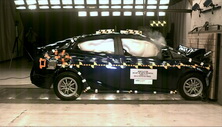
Open safety recalls, the components owners report failing most often, crash-test results and running costs for the 2018 Toyota Prius, assembled from NHTSA and EPA records.
Everything on this page applies to the model as a whole. Run its VIN to decode that exact car, its engine, trim, assembly plant and factory equipment, alongside these records.
Open a VIN recordRecalls and complaints are filed against a specific model year, so figures differ from one year to the next even within a single generation. See every Toyota Prius year.
Over 5 years this costs $5,250 less in fuel than an average new vehicle.
NHTSA lists 1 recall for this make, model and year. Recalls apply to the model, so some may already be fixed on this specific car. A dealer can confirm from the VIN.
Issue: Toyota Motor Engineering & Manufacturing (Toyota) is recalling certain 2016-2018 Toyota Prius vehicles. A portion of the engine wire harness connected to the hybrid Power Control Unit (PCU), could contact the cover at this connection and wear, causing an electrical short circuit.
Risk: An electrical short can increase the risk of a fire.
Remedy: Toyota will notify owners, and dealers will inspect the engine wire harness assembly and replace it if damage is found. A protective sleeve or protective tape will be included to prevent any future damage. These repairs will be performed free of charge. The recall began October 30, 2018. Owners may contact Toyota customer service at 1-888-270-9371. Toyota's number for this recall is J0T.
Campaign 18V579000

NHTSA frontal crash test
1 open NHTSA investigation into this model. Investigations come before recalls, so these are potential defects not yet covered by one.
Rated configuration: 2018 Toyota Prius 5 HB FWD
The parts named most often across 36 owner complaints filed with NHTSA for this make, model and year.
1 crash · 1 injured
1 crash · 1 injured
Complaints are self-reported and skew toward problems people find alarming, so read this as where to look rather than as a defect rate.
The contact owns a 2018 Toyota Prius. The contact stated that while having a routine oil change, the contact was made aware that there was no coolant in the coolant reservoir. No warning lights were illuminated. The contact was constantly adding coolant to the coolant reservoir; however, the following day the coolant reservoir was empty. The failure had occurred on several different occasions. The vehicle was taken back to the residence. The vehicle was not diagnosed or repaired. The contact researched and was made aware of TSB Number: 013519; however, the VIN was not included. The manufacturer was notified of the failure. The failure mileage was approximately 89,100.
The contact owns a 2018 Toyota Prius. The contact stated that while driving at an undisclosed speed, the engine constantly overheated. An unidentified warning light was flashing on the instrument panel. An independent mechanic inspected the vehicle and became aware that the coolant reservoir was empty. One month later, the same failure reoccurred. A second independent mechanic inspected the vehicle, and the coolant reservoir was empty. The vehicle was taken to a dealer. The dealer diagnosed the vehicle with a coolant leak into the head gasket. The dealer advisor referenced a customer satisfaction program as the cause of the failure; however, the vehicle was over the mileage limit for the program. The vehicle was not repaired. The manufacturer was notified of the failure. The failure mileage was 188,000.
Both taillamps holding moisture. Could cause electrical issues or fire. .. same year and model car have same reported issues and were fixed by manufacturer. This vehicle is the same but different level.
Driver door lock actuator not working. This seems to be a common problem for Toyota over the last decade, but they yet to put more vehicles to their recall list. Actuator just stopped working. I have to use key out of FOB to manually open. This is a safety issue if I’m trying to get in my car quickly for safety reasons and it does not open.
The contact owns a 2018 Toyota Prius. The contact stated the trunk opened at a slow speed and failed to remain open. The dealer was contacted and informed of the failure. The dealer informed the contact that the vehicle needed to be taken in to be inspected. The vehicle was not diagnosed or repaired. The manufacturer was informed of the failure and confirmed that the VIN was not covered under recall. The manufacturer directed the contact back to the dealer for assistance. The failure mileage was approximately 160,000.
Was driving around 35 mph and my right side mirror blew up. The back blew off and the mirror was shattered and hanging. Nothing hit it. Contacted Toyota and the parts have been on a stop, but there is no recall. It has been 4 months.
The contact owns a 2018 Toyota Prius. The contact stated while driving at an undisclosed speed, the check engine warning light illuminated. The vehicle was taken to the dealer where it was diagnosed with a failed heat exchanger, catalytic converter, and exhaust system. The contact was informed that the heat exchanger, the catalytic converter, and the exhaust system needed to be replaced. The vehicle was not repaired. The manufacturer was made aware of the failure but provided no assistance. The failure mileage was approximately 89,682.
The contact owns a 2018 Toyota Prius. The contact stated that while in bumper-to-bumper traffic, the vehicle suddenly accelerated. The brake pedal was applied but failed to respond. The driver crashed into the front passenger side of the Lexus. The vehicle continuously moved forward. The contact was eventually able to pull over safely. The pre-collision malfunction warning light illuminated. The brake malfunction light was flashing. The air bags did not deploy. There was no reported fire or injury. A police report was filed. The vehicle was taken to the local dealer, who could not determine the failure. The vehicle was not diagnosed or repaired. The vehicle was then towed to an autobody center where it remained. The manufacturer was contacted, but no additional assistance was provided. The approximate failure mileage was 39,000.
The Airbag lights were lit, the person sitting with seatbelt on (flashing) and the person sitting with an inflated airbag in front of them. I ran an OBD2 scan on SRS and got code B1656. Driver seat belt buckle Left Hand. I Investigated the latch and found one wire was snapped off and a couple of inches shorter that the wire that was still connected. I have included 2 pictures of the back end of the seat belt latch. You can see the broken wire and where it use to be connected.
Someone rear-ended my Prius and they were driving a Ford 250 truck pulling a large flatbed truck that had a huge box on it. My seat went forward and backwards - I slammed my knee under the dashboard and then slammed by head into the headrest and I could not reach the pedals after this. I have repeatedly asked the collision center to look at it because there is nothing about it on the report of the estimate of repairs. My adult son was a passenger in the front and his seat didn't move.
AIRBAG LIGHT ON
The automatic high beams will occasionally fail to operate and are stuck in low beams until about 2 minutes have passed, or until the automatic high beams switch is turned off to disable the system. This seems to be a software issue, as it seems to occur when an approaching vehicle passes by with bright lights. When this happens, all high beams are disabled for a couple of minutes, even if the high beam lever is switched to low beams and back to high.
Showing 12 of 36 complaints.